
How it works
How we lay turf, step by step
The ground under a lawn decides how good it looks for years to come. Here's what happens from the moment you ask for a quote to the first time you mow.
The job in seven steps
Your quote
You tell us about the garden through the quote form. If we need to see it, we'll arrange a visit. Your quote lists each part of the work so you know exactly what's included.
Booking your day
When you accept, your date is held from just £100 deposit. We keep an eye on the weather, and if the ground is frozen or waterlogged we'll agree a new date with you.
Lifting the old lawn
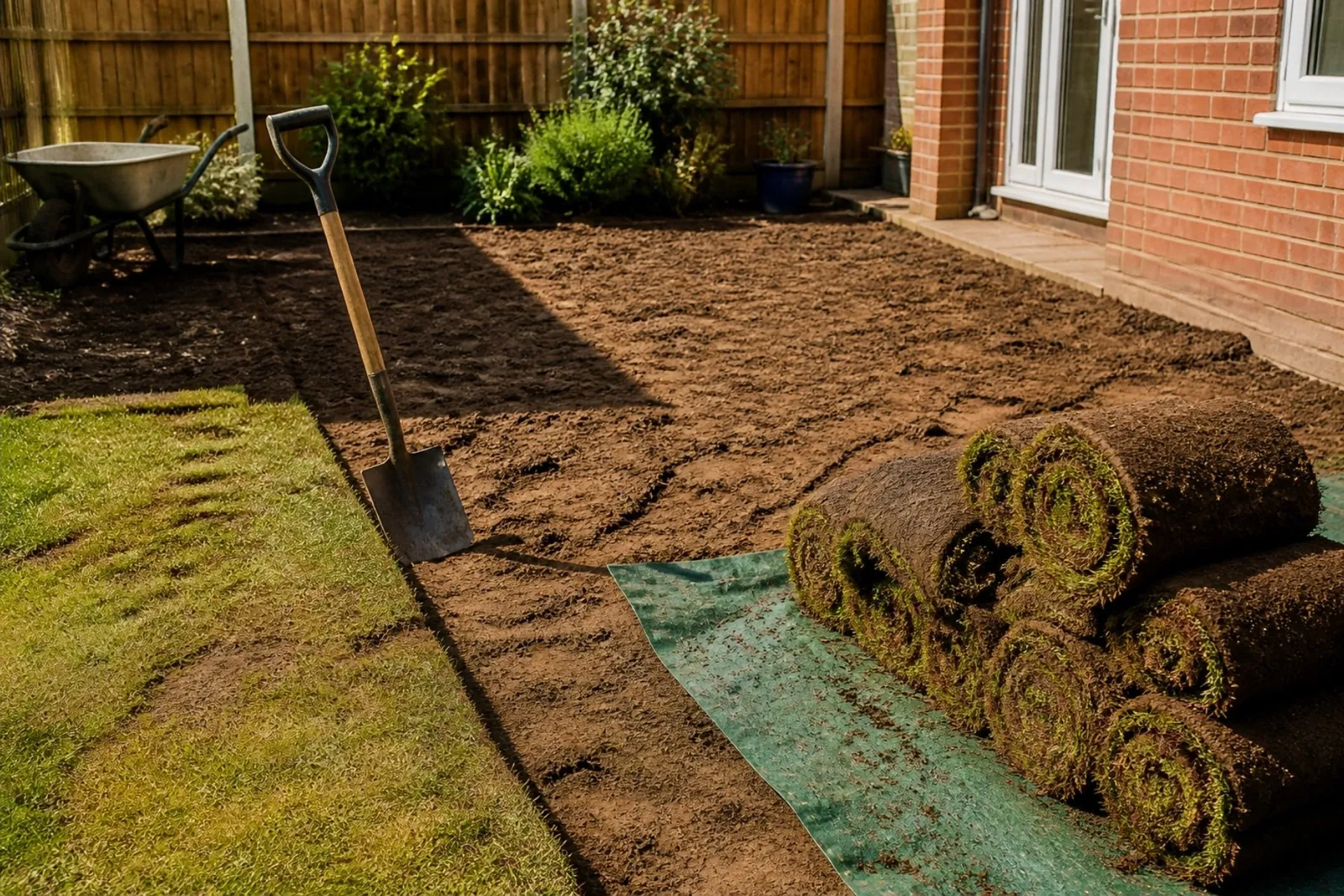
Where there's an old lawn, we cut it out at a consistent depth and roll it up. Weeds and roots come out with it. The waste is taken away as part of the job.
Getting the ground right
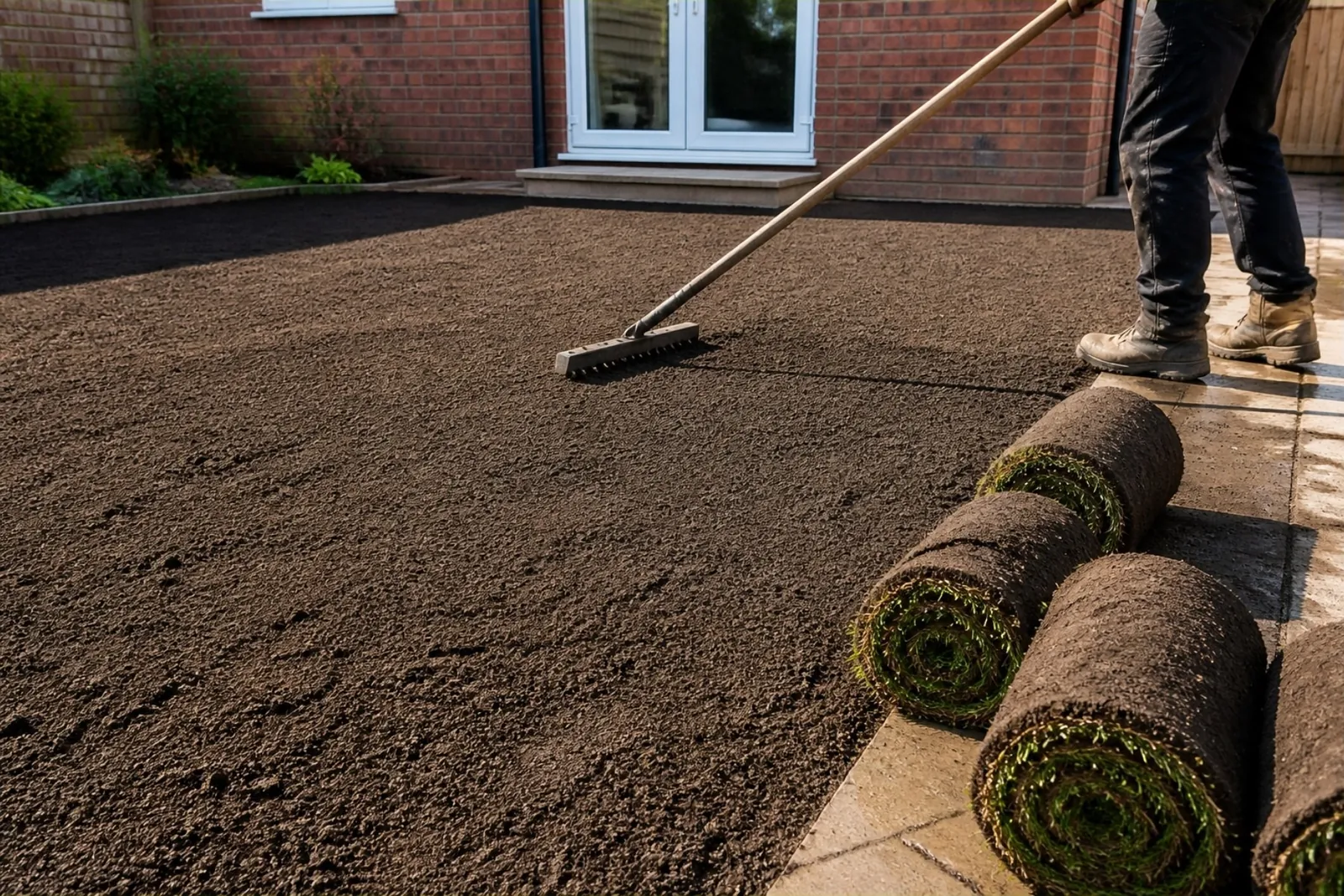
We break up compacted soil, pick out stones and rubble, and level it. Where the soil is thin or poor we bring in topsoil. Builders' rubble found underneath is priced separately.
Laying the turf
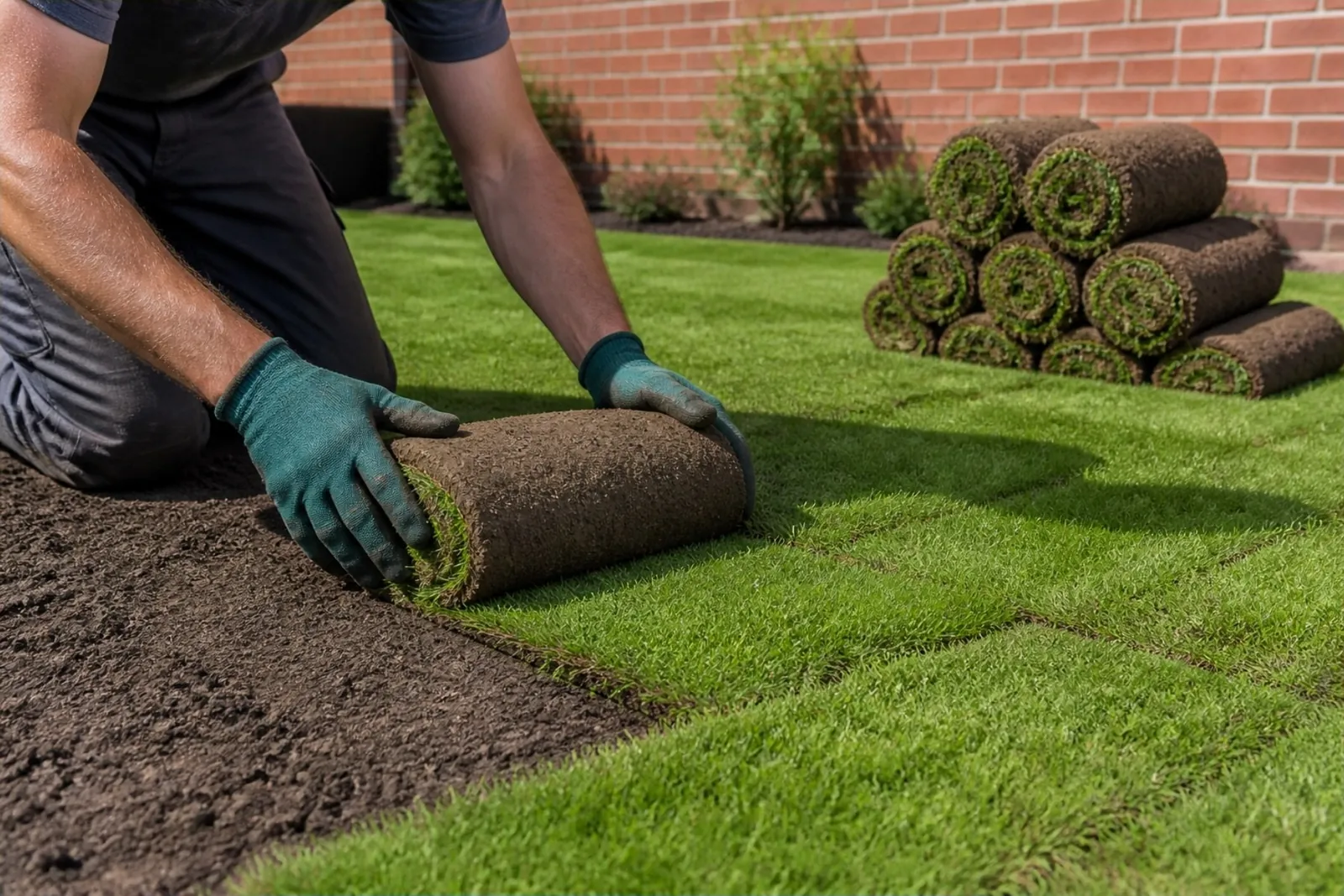
Fresh rolls go down in straight rows, tight together, with joints staggered like brickwork so there are no long seams. We work from boards so the prepared soil isn't trodden flat.
Edges and finishing
Edges are cut clean against borders, paths and patios. Curves are shaped by hand. Offcuts fill the small gaps and the lawn is firmed down so every roll touches the soil.
Watering and handover
The new lawn gets a thorough first soak. Before we leave we walk you through watering, when to mow and when it's ready to use.
A closer look at the ground work
Why lifting matters
Laying new turf over old grass leaves a spongy layer that rots and stops the new roots reaching the soil. Lifting it gives the turf clean contact with the ground. Read why you should never lay turf over old grass.
Levelling and topsoil
Small dips that are hard to see on bare soil show up straight away on a finished lawn. We rake the ground level and fine, topping up with topsoil where the soil is thin, so the turf has a good depth to root into.

Laying tight
Rolls are butted together without stretching, and short pieces go in the middle of a row, never at the edges where they would dry out. That's what stops gaps opening up as the lawn settles.
How long it takes
Most gardens are finished within a day. A small yard or front lawn can be done in a morning. Larger gardens, steep or uneven ground, or a lot of clearing first can add time, and your quote will tell you what to expect.
Bad weather can occasionally move a date. We'll always let you know and offer another day.
What we ask of you before the day
- Clear the lawn of furniture, toys, pots and anything stored on it
- Tell us the way into the garden and whether parking is restricted on your street
- Point out buried pipes, cables, drains or sprinkler lines if you know of them
- Make sure an outside tap or hose connection is available for watering in
- Keep pets indoors while we're working
After we leave
The first few weeks are about watering and keeping off. Our aftercare guide has a simple watering plan, advice on the first cut and the signs of a thirsty lawn.
Worried about anything? Send us a photo and we'll help where we reasonably can.
Common questions
Do I have to stay in while you work?
Not necessarily. We just need a way into the garden and a working outside tap, which we'll sort out with you when you book.
Do you rotovate the soil?
Only where it helps. Compacted or overgrown ground benefits from being broken up; good soil often just needs levelling and raking. See do you need to rotovate before laying turf?.
What happens to the old turf and soil?
We remove it as part of the work. Builders' rubble is priced separately.
When can I walk on it?
Keep off as much as you can for the first two to three weeks while the roots take. Light walking to water is fine.