
Lawn guide
Do you need to rotovate before laying turf?
Rotovating churns up the top layer of soil with a machine. It can be a big help before laying turf, but it isn't always needed, and done at the wrong time it can make things worse.
When rotovating helps
A rotovator breaks up compacted soil and mixes in any organic matter or fresh topsoil, which helps new roots get down. It's useful where:
- The ground has been walked on, driven on or used for storage
- The soil is hard and dry after a shed, decking or paving has come up
- You're mixing new topsoil into poor existing soil
- The area is large and digging by hand would take a long time
When it doesn't
On soil that's already loose and in good condition, such as an old vegetable bed, there's little to gain. And rotovating weedy ground chops up roots like couch grass and bindweed, so each piece can sprout again. It's better to clear those weeds first.
Wet clay is the other one to avoid. Rotovating it when sticky smears the soil and leaves a hard layer underneath. Clay is best worked when it's moist but crumbly.
Rotovate or not?
| Your ground | Our usual approach |
|---|---|
| Compacted, hard soil | Break it up, by machine or by hand |
| Good, loose soil | Level and rake; no need to rotovate |
| Weedy ground | Clear weeds and roots first |
| Wet, sticky clay | Wait for better conditions, or add topsoil over the top |
| Old lawn being replaced | Lift the turf first, then loosen the soil underneath |
Rotovating is only one step
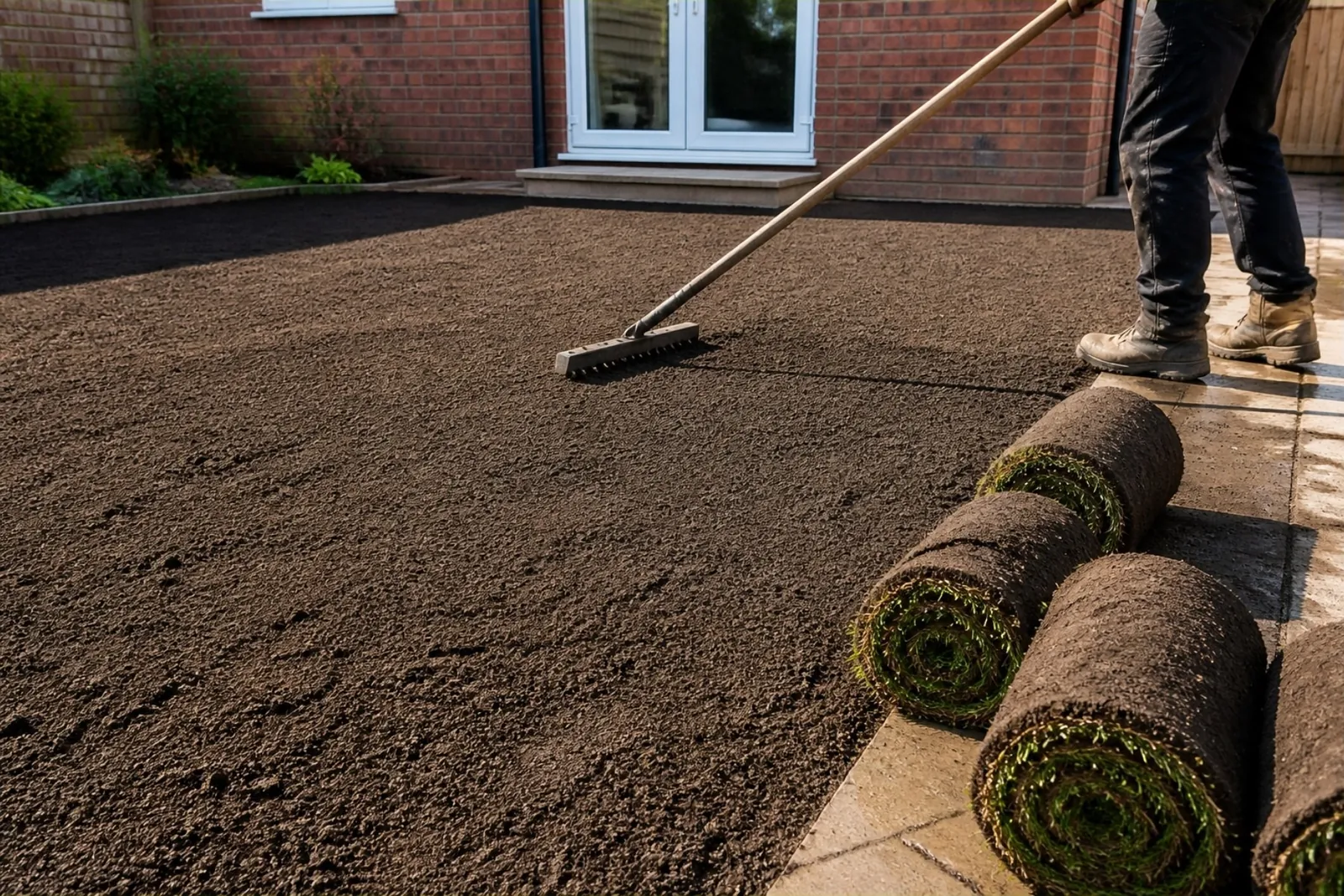
After breaking up the soil, it needs to be levelled, firmed and raked fine, or the new lawn will sink unevenly. Rotovated soil is fluffy and full of air, so firming it properly matters. When we prepare a lawn, we decide whether rotovating is worthwhile for your garden and include it in your quote if it is.
Common questions
Can I rotovate the garden myself before you come?
You can, but please talk to us first. Rotovating weedy ground or wet clay can create more work.
Is rotovating the same as digging over?
It does a similar job faster, but it works a shallower layer and doesn't remove roots.