
Lawn guide
Why you should never lay turf over old grass
It looks like a shortcut: roll new turf straight over the old lawn and save the digging. In practice it's one of the most common reasons new lawns fail. Here's why.
What goes wrong
The old grass under the new turf dies off without light. As it rots, it forms a spongy layer between the new roots and the soil. That layer holds water in wet weather and dries out fast in warm weather, and it can heat up as it breaks down.
- New roots can't reach the soil, so the turf stays shallow-rooted and dries out quickly
- The lawn feels soft and uneven as the old grass decomposes
- Bumps and dips in the old lawn show through the new one
- Weeds and coarse grasses from the old lawn can grow back through
- The new lawn sits higher, often above paths and patio edges
What we do instead
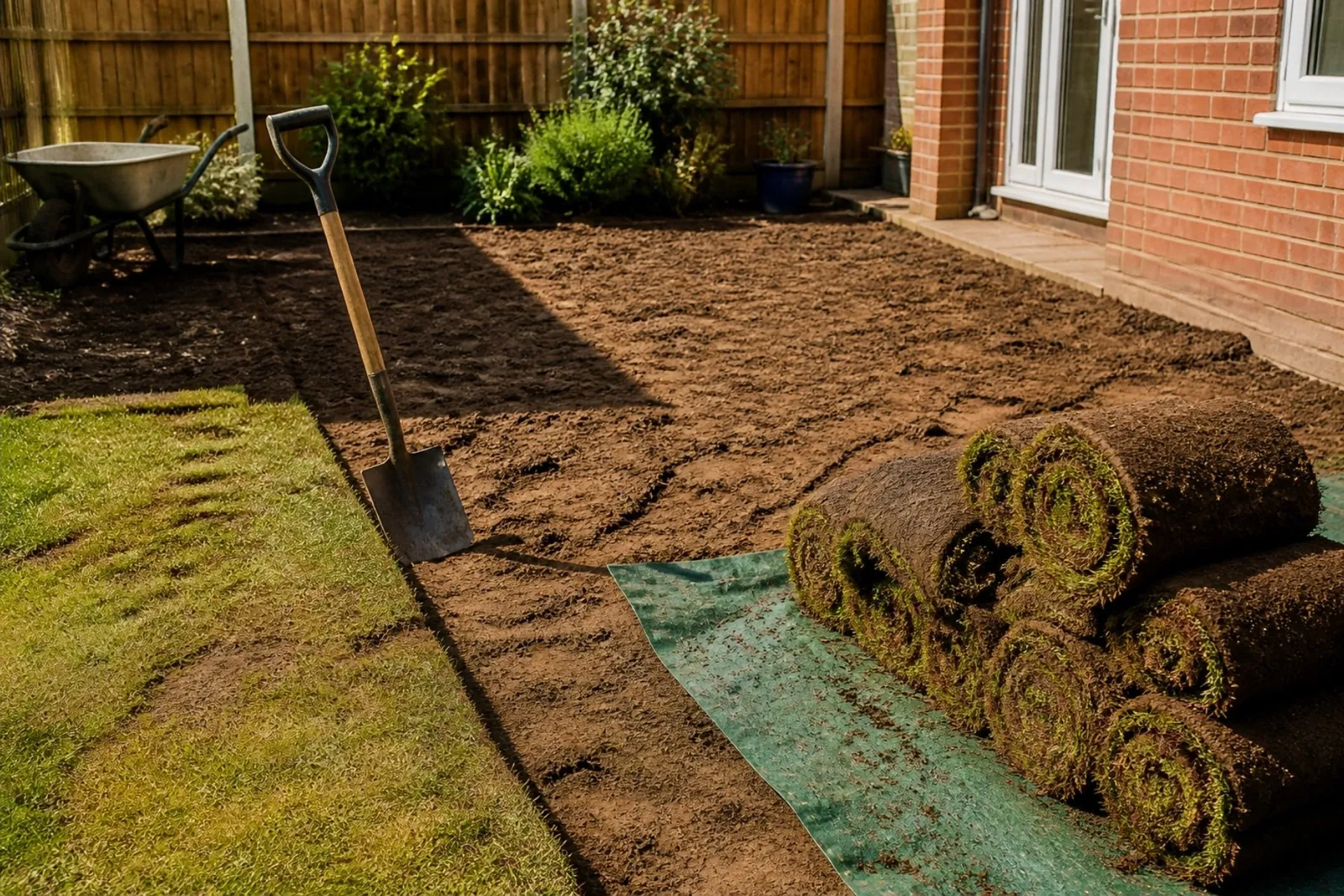
Lift the old lawn
Cut out with its roots at an even depth and taken away.
Loosen the soil
So new roots can grow straight down into it.
Level and top up
Fill dips, add topsoil where needed and rake to a fine, firm finish.
Lay fresh turf
Every roll in direct contact with prepared soil.
Laying onto existing soil
If the soil under your old lawn is good, it doesn't all need replacing. Once the grass is lifted, the existing soil is often fine after loosening and levelling, with topsoil only where it's thin or low. Read laying turf without topsoil to see when that works.
Is it ever OK?
Sometimes people get away with it on a very short, sparse lawn, but it's a gamble, and putting it right later means lifting both layers. Lifting the old lawn first is the reliable way to a lawn that lasts. It's part of every lawn replacement we do.
Common questions
Can't I just kill the old grass with weedkiller first?
Dead grass still forms the same spongy layer. It needs lifting.
What happens to the old turf?
We take it away as part of the job.