
Lawn guide
Replacing artificial grass with real turf
Fed up with a plastic lawn that gets hot, smells after the dog or is starting to look tired? Switching back to real grass is very doable. The key is what lies underneath.
What's under artificial grass
Artificial grass is usually laid on a built-up base: a layer of crushed stone, a layer of sharp sand or dust, a weed membrane, and sometimes a shockpad. The soil underneath may have been dug out first to make room.
None of that suits a real lawn. Grass roots need real soil, so the base has to come out and topsoil go back in.
How the swap is done
Lift the carpet
The artificial grass is cut into strips, rolled and taken away along with any shockpad.
Remove the base
Sand, stone and membrane are dug out. This is the heaviest part of the job.
Check the soil underneath
If the original soil was dug out, the level is now low and needs building back up.
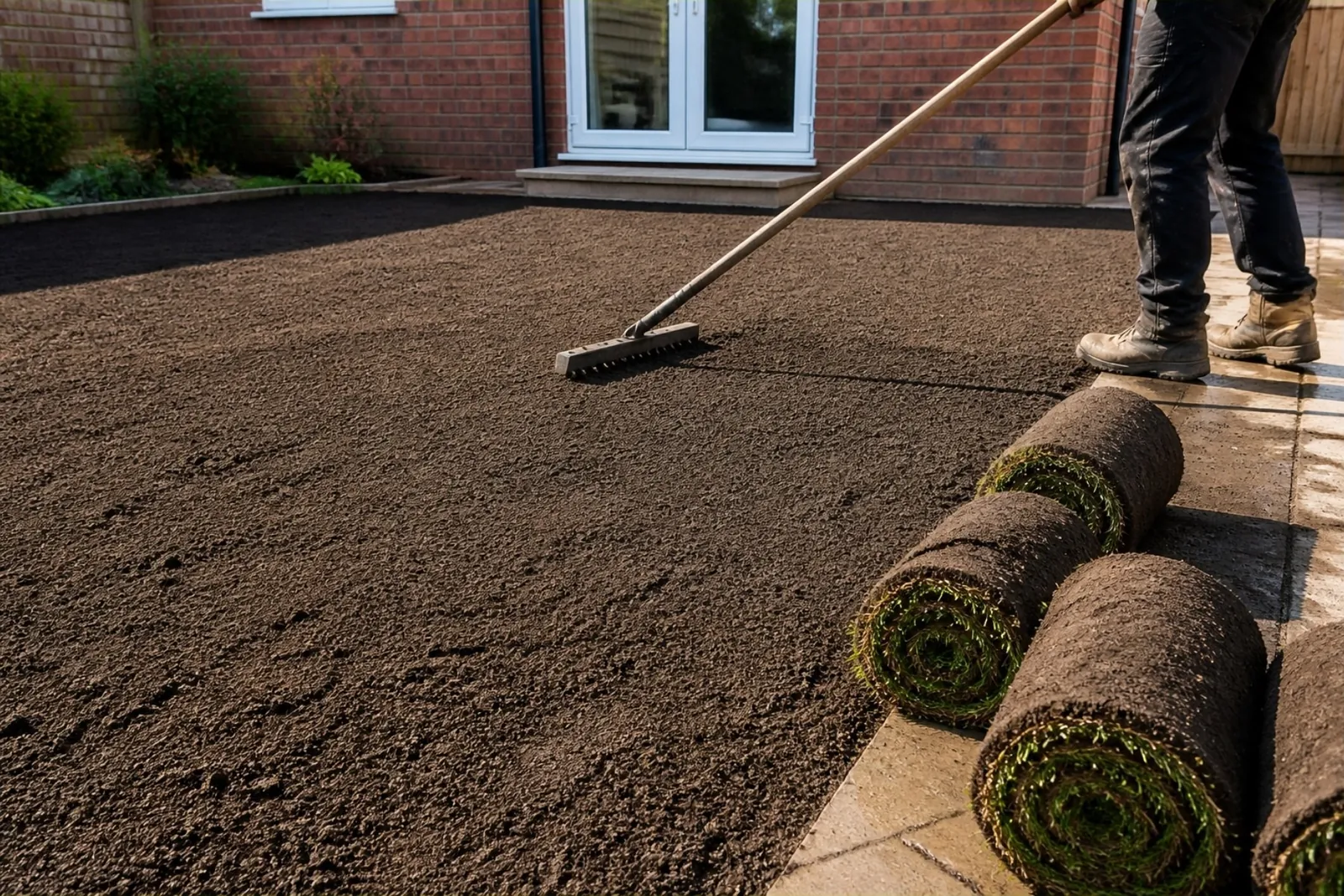
Bring in topsoil
Topsoil is spread, firmed and levelled to give the new turf a good bed.
Lay the turf
Fresh turf goes down, the edges are cut and it's watered in.
Why it costs more than a standard returf
The old base is heavy and there's usually a lot of it. Taking it away and replacing it with topsoil adds labour and materials compared with lifting an ordinary lawn. Your quote will list the removal and the topsoil separately so you can see what's involved.
Living with a real lawn again
You'll be mowing again, but you'll also get a cooler garden in summer, better drainage after rain and a lawn that worms and birds love. Our aftercare guide will get it established.
Common questions
Can turf go straight on top of the sand base?
No. Turf needs real soil to root into. The base has to come out and be replaced with topsoil.
What happens to the old artificial grass?
We remove it along with the base materials.